Chicago Injury Lawyer Blog









In November of 2019, Alexandra Mansonet was on her way to work at a New Jersey non-profit at around 8:30 a.m., when she smashed into the back of a parked Toyota Corolla. The Corolla subsequently shot forward and struck a pedestrian, Yuwen Wang, which sent her flying into the air. Ms. Wang had just said goodbye to her husband for the day as she went out for her morning walk. Following the collision, she was transported to the hospital and died several days later. Ms. Mansonet told police that she looked up to see the Corolla right in front of her as she was driving. She admitted that she was texting and driving at the time of the collision.
The prosecution equated the crime of her distracted driving with that of someone who had been drinking and driving. People seemingly check their phones and send text messages while driving all the time, but according to Cambridge Mobile Telematics, distracted driving can actually be more dangerous than drunk driving. Drunk drivers need about four more feet added to their stopping reaction time than non-distracted sober drivers. However, a distracted sober driver (for example, someone who is texting) needs about 70 more feet to look up and realize what is going on. Continue reading
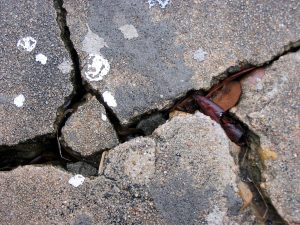 There are several nuances to premises cases, especially trip and fall cases caused by defective pavements. One of the nuances to a premises case is the de minimis rule. Under the de minimis rule, liability for the defendant generally attaches for sidewalk defects approaching two inches in height. Birch v. City of Quincy, 241 Ill. App. 3d 119, 121 (1993), Harris v. Old Kent Bank, 315 Ill. App. 3d 894, 900 (2000). Courts are hesitant to find a defendant liable for sidewalk or pavement deviations less than two inches in height because the de minimis rule was originally intended to protect [defendants] from the burden of having to monitor and maintain great lengths of sidewalk in perfect condition. Id.